
The Money That Waits Three Years
"Just put it through Songtrust and forget about it." That is sound advice for one kind of catalogue and an expensive habit for another, and the figure that separates them is already in your streaming dashboard.
Mechanical royalties are the reproduction money on a composition, owed every time a song is streamed or downloaded in the United States on a licensed service. The Mechanical Licensing Collective has been collecting them since January 2021.
Membership costs nothing at all. A songwriter with no deal and no company joins as a self-administered songwriter, which is the member type this lesson is written for.
The MLC does not ask you to own a publishing entity. Where there is no publishing name, your own member record is the publisher on your works.
So this lesson walks a real registration screen, separates the two words the whole system runs on, and prices the one decision here worth thinking about for longer than five minutes.
Free, and mostly unopened
Roughly $160 million of pre-2021 US mechanical royalties was still unmatched in 2026, out of a pool the streaming services handed over in 2021.
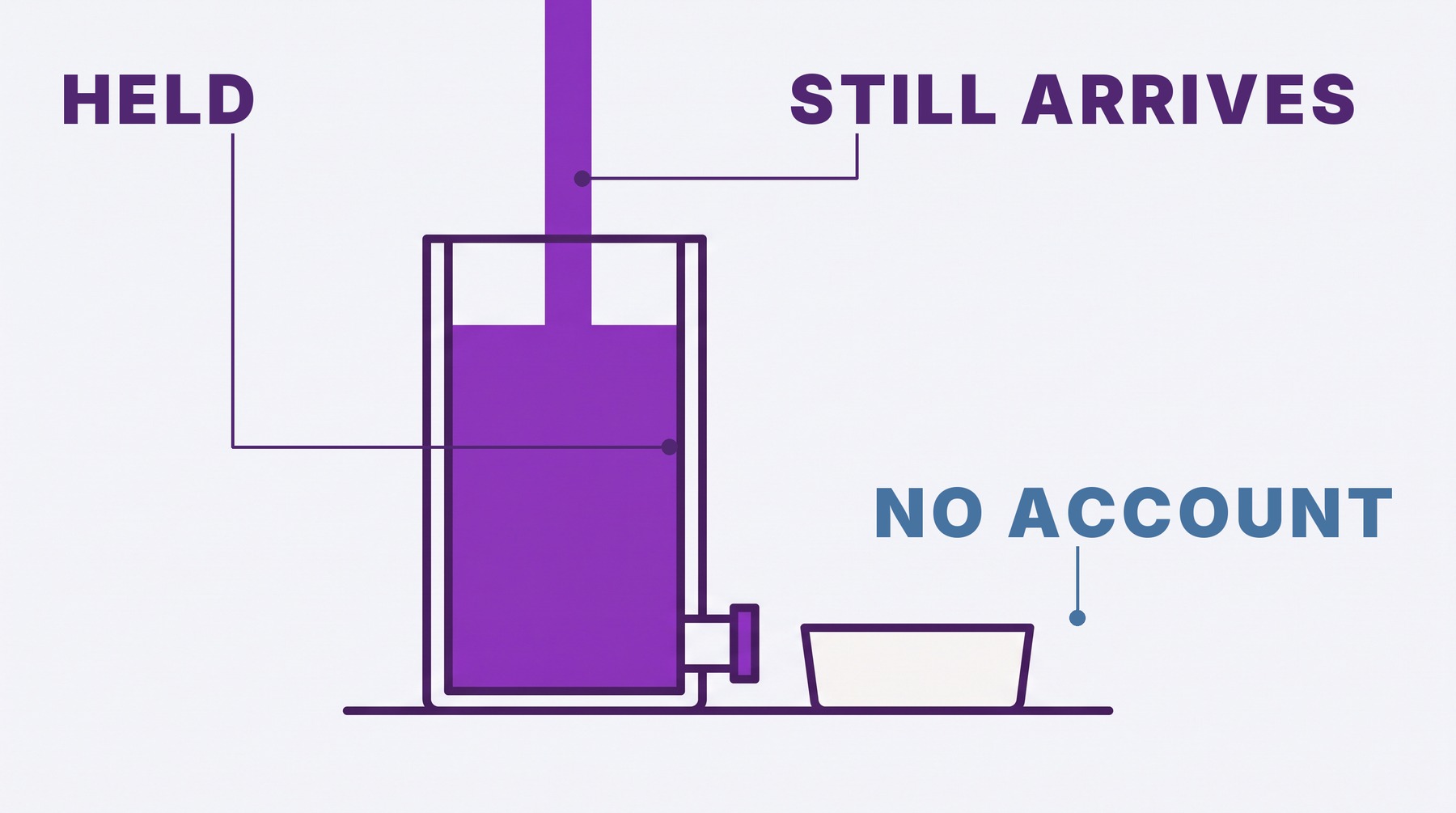
Money keeps arriving whether or not anybody has claimed it. The account that would receive it is the thing nobody creates, because creating it takes an afternoon and pays nothing back that week.
What a work registration needs
Registration happens one song at a time in the member portal, and the form is shorter than its reputation. Only the work title is genuinely required, and a registration carrying nothing else will match nothing.
The work title, plus alternate titles for language versions, live versions or remixes with identical writers.
Every writer by legal name with their IPI number, and at least one composer or author role on the work.
The publisher, the party with a direct relationship to the songwriter, carrying a collection share between 0.01 and 100 per cent.
The recording, where the ISRC lives. That field is what lets a reported stream find its way back to the song you registered.
Skip the recording step and you have made a correct entry in a database with nothing able to arrive against it.
Keep that beside the screen for your first ten works and the sequence stops needing a note. Co-writers who administer themselves each join separately and register their own share.
A registration is a claim. Nothing pays out on a work until somebody has claimed the share the money belongs to.
Unmatched, or unclaimed
Two failures look identical on a bank statement. They are repaired in completely different places. Unmatched means the reported use could not be tied to any registered work. Unclaimed means the work is known and a slice of it has nobody claiming it.
Both end up in the same holding pattern, accruing interest, waiting for a claimant who may never turn up.
As of March 2026, $253.3 million sat unmatched and $203.8 million unclaimed from 2021 to 2024 usage alone. Two piles, two causes, and the smaller one is the one a co-writer creates.
Your song is registered with an ISRC. Your co-writer never joined The MLC and has claimed nothing. What is their 50 per cent?
Unmatched, because half the work has no data behind it
Unclaimed, because the work is identified and one share has no owner claiming it
Paid to you, because you are the only registered party
Your half pays out on schedule. Theirs waits, and none of it is redirected to you for being the person who did the paperwork.
Three years, then market share
Unmatched and unclaimed royalties from usage on or after 1 January 2021 are held for a minimum of three years while the collective works to find the owner. Interest earned in that time travels with the money.
What is left after that gets distributed to music publishers and self-administered songwriters on a market share formula. In plain terms, it ends up with publishers who already hold large registered catalogues.
The number that decides it
A publishing administrator registers your compositions worldwide, collects the publisher share and pays it through, less commission. Direct registration at The MLC covers US mechanicals and charges nothing for it.
Route | Cost to start | Commission | Reach |
|---|---|---|---|
Direct at The MLC | $0 | none | US mechanicals |
Songtrust | $100 per songwriter | 15% performance, 20% other | worldwide publishing |
TuneCore Publishing | $75 per writer | 20% publishing, 50% sync | worldwide publisher share |
Sentric | none published | 20%, 28-day rolling contract | worldwide publishing |
One figure separates those four rows, and it is the share of your listening happening outside the United States. On US-only listening a commission lands on money The MLC would have paid you for free. On heavy non-US listening the comparison turns into 80 per cent of something against all of nothing.
Either way the reach stops at the composition, so your recording money still arrives through your distributor and the non-interactive money still needs its own free account. So which of your last three releases actually has an audience outside the United States?
Where these numbers come from
The unmatched and unclaimed figures, the 60 distributions and the 74,000 members come from The MLC 2025 Annual Report, checked September 2026. The historical pool arithmetic, roughly $160 million still unmatched, is subtraction on The MLC's own published totals rather than a headline it states. Registration fields are quoted from help.themlc.com. Administrator terms come from each vendor's own pricing pages as they read in September 2026. Your own non-US share is yours to read.