
Names That Match
A registration can be correct on every field and still pay nobody. Matching is done by machine, against exact strings and against numbers, and a database has no opinion about who you obviously are.
Three codes carry the whole system. Learn what each one names and most matching failures stop being mysterious.
The ISRC names a recording. The ISWC names a song. The IPI names a person or a company, and the money travels along whichever one is filled in correctly.
So this lesson pins down the three codes, puts them in the order they have to arrive in, and shows what a claimed percentage does to a payment when the total lands anywhere other than 100.
Three codes, three jobs
Each code answers a different question, and they are issued by different people at different moments.
ISRC, the recording code, comes from your distributor free or from your own registrant prefix at $95 one time. It travels with the audio.
ISWC, the song code, is assigned free by the organisation you affiliate with, once your work is registered there. It travels with the composition.
IPI, the party code, is issued free on affiliation. You get one as a writer and a second one for your publishing entity, and both go on every registration.
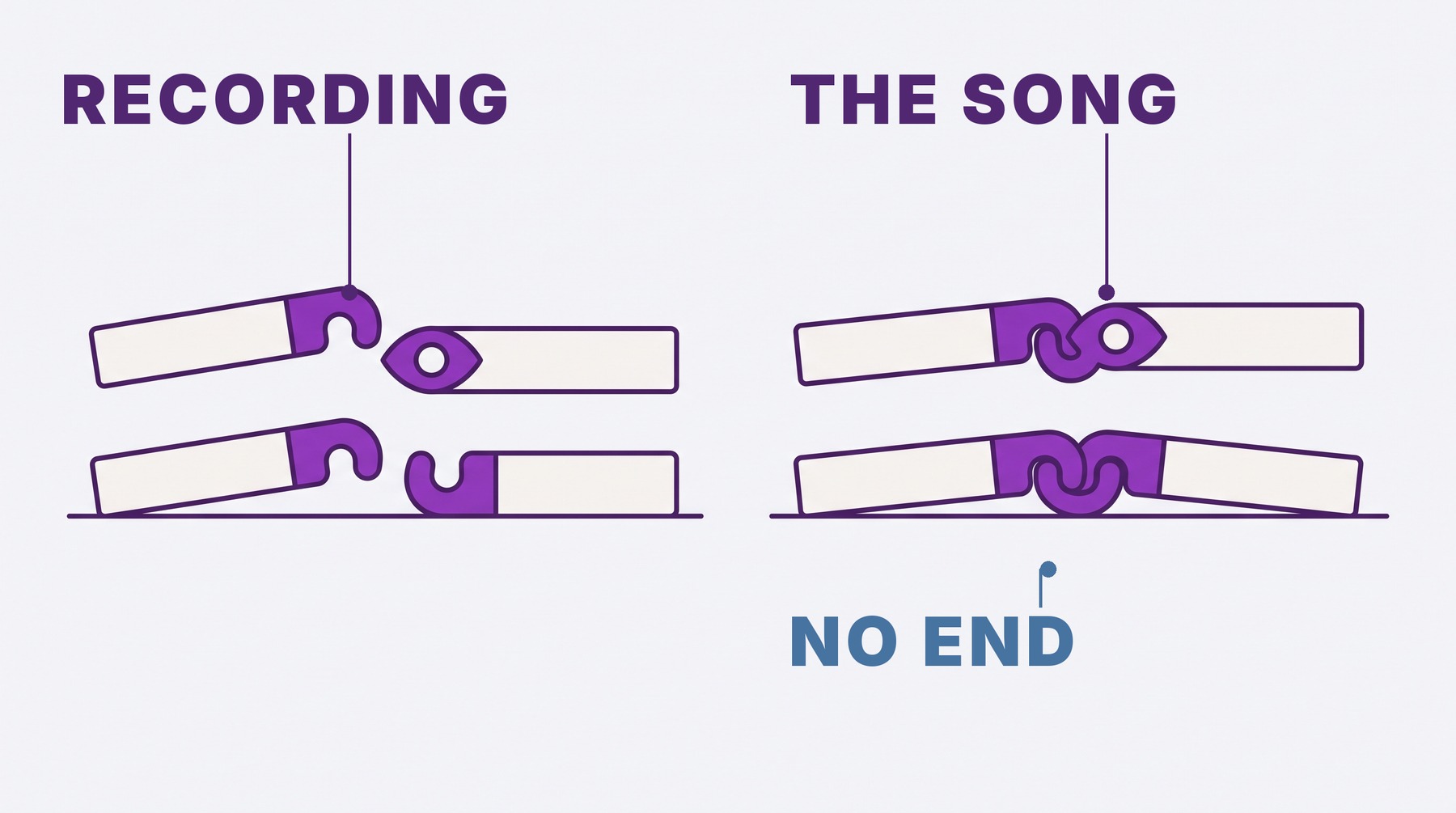
Two ends of one link. The reported stream carries the recording code, your registration carries the song code, and payment happens where they meet.
The order they arrive in
Every writer on a work needs an IPI before an ISWC can be issued for that work. So affiliation comes first, then work registration, and the sequence is not a preference.
Try it the other way and the registration stalls with a co-writer flagged as unidentified. Nobody rejects it outright. It simply sits, and the money against it sits with it.
The other ordering trap is the recording code. Register a work at The MLC without an ISRC in the recordings step and reported usage has nothing to attach to.
Every writer named in legal form with an IPI
The recording added, ISRC included
Publisher entity at the same organisation as the writer
A stage name where a legal name belongs
Recordings left off because the field is optional
Shares that add up to something other than 100
The left column is one form filled slowly. The right column is the same form filled in four minutes on a phone, and both of them look finished on screen.
What a split sheet proves
A split sheet is not a mood board. The MLC's own dispute policy lists signed split sheets among the documents that substantiate a claim, alongside publishing agreements and letters of direction.
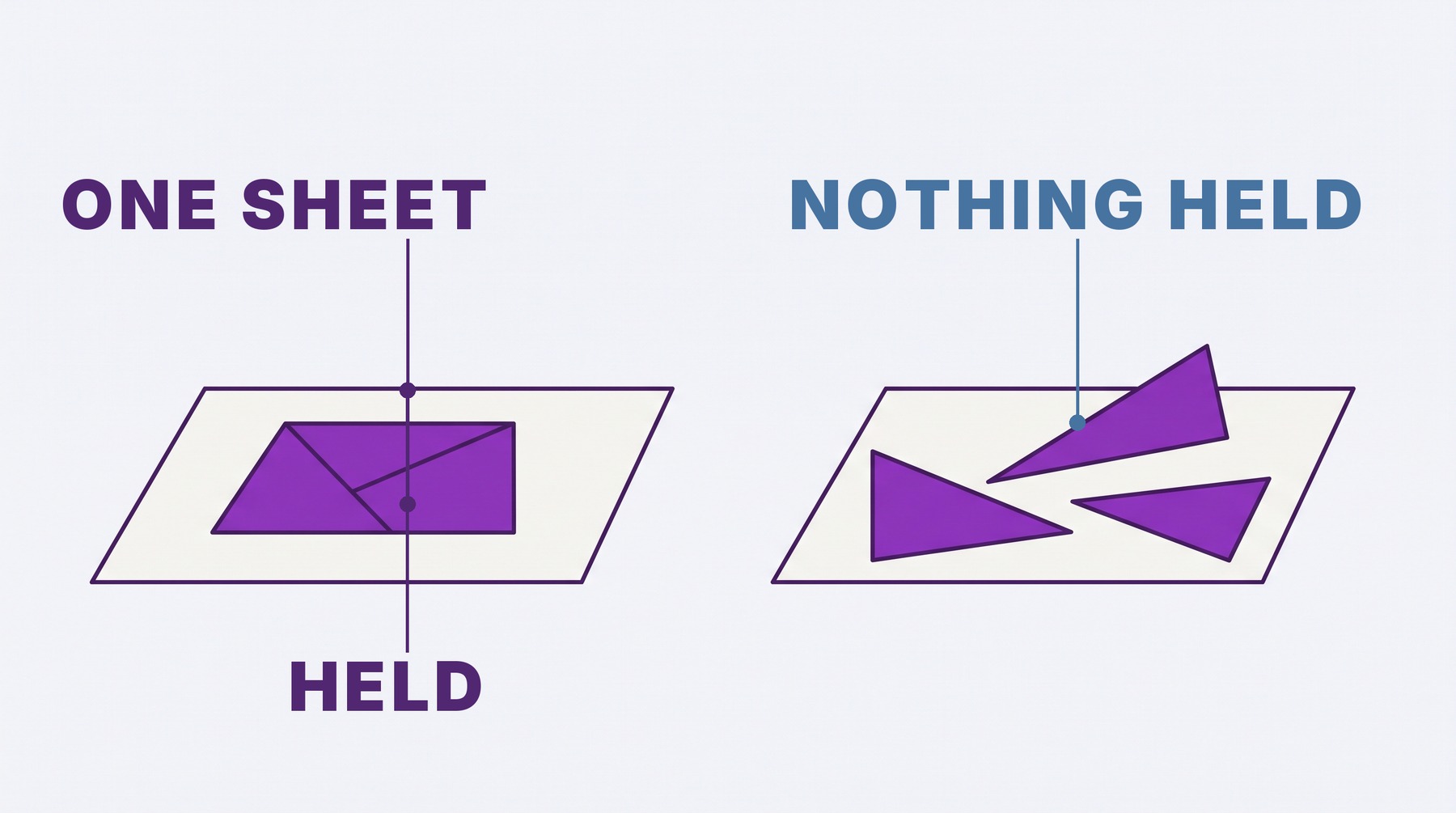
Sign it at the end of the session, before anybody leaves the room. It should carry the title, the date, each writer's legal name, their affiliation and IPI, their publishing name, their percentage, and a signature from every person in it.
When a name does not match
Jon Smith and Jonathan D. Smith are two parties to a matching engine. So are a stage name in one system and a passport name in another, and so is the same name with different punctuation around it.
Use your legal name on every registration and put the artist name in the artist field where it belongs.
Under 100 and over 100
Two failures live at the total. Claim less than the whole work and the remainder becomes unclaimed royalties, held on the three year clock while nobody comes for it.
Claim more than the whole work and The MLC calls it an overclaim, defined as multiple claimants claiming shares totalling over 100 per cent. Royalties for the contested share go into suspense. Claimants then get a documentation period of 30 calendar days from the date of notice.
Type the three shares your last co-write agreed on, then read what happens underneath.
Under 100 costs one writer their slice. Over 100 stops payment for every collaborator on the work, including the ones who filled their part in correctly, and the clock keeps running while it is sorted.
The MLC will not decide who is right, because ownership questions belong to the parties or to a court. So who on your last co-write has never told you their IPI number?
Where these numbers come from
The overclaim definition, the suspense mechanism and the 30 calendar day documentation period are quoted from The MLC Dispute Policy of February 2021, with the substantiating documents list in section 5.1.1, checked September 2026. The identifier roles come from The MLC's own identifier guidance and the $95 registrant prefix from usisrc.org. Split sheet contents follow ascap.com's registration guidance and are a working checklist rather than a quoted form.