
The Three-Year Fuse
What happens to money owed on a recording that nobody ever came to claim? Everywhere else in this system it waits. In one place it burns.
Non-interactive digital radio pays a royalty on the recording itself, collected by SoundExchange, the only organisation the US government has designated to administer that licence. More than 3,600 services pay into it, satellite radio and internet radio among them.
Unclaimed SoundExchange royalties expire after three years. The regulation is 37 CFR 380.44, and it says no claim to distribution shall be valid after that period.
So this lesson takes the three shares that licence produces apart, shows which two an artist who owns their masters is entitled to, and puts a date on what waiting costs.
One licence, three shares
The split is fixed in law. It does not move with the service, the deal or the size of anybody involved.
Forty-five per cent goes directly to the featured artists on a recording. Fifty per cent goes to whoever owns the sound recording. The last five per cent goes to a fund for the session players and backing vocalists who were in the room.
Two of those three are available to a writer who paid for their own session. The third travels to that fund whatever anybody does about it.
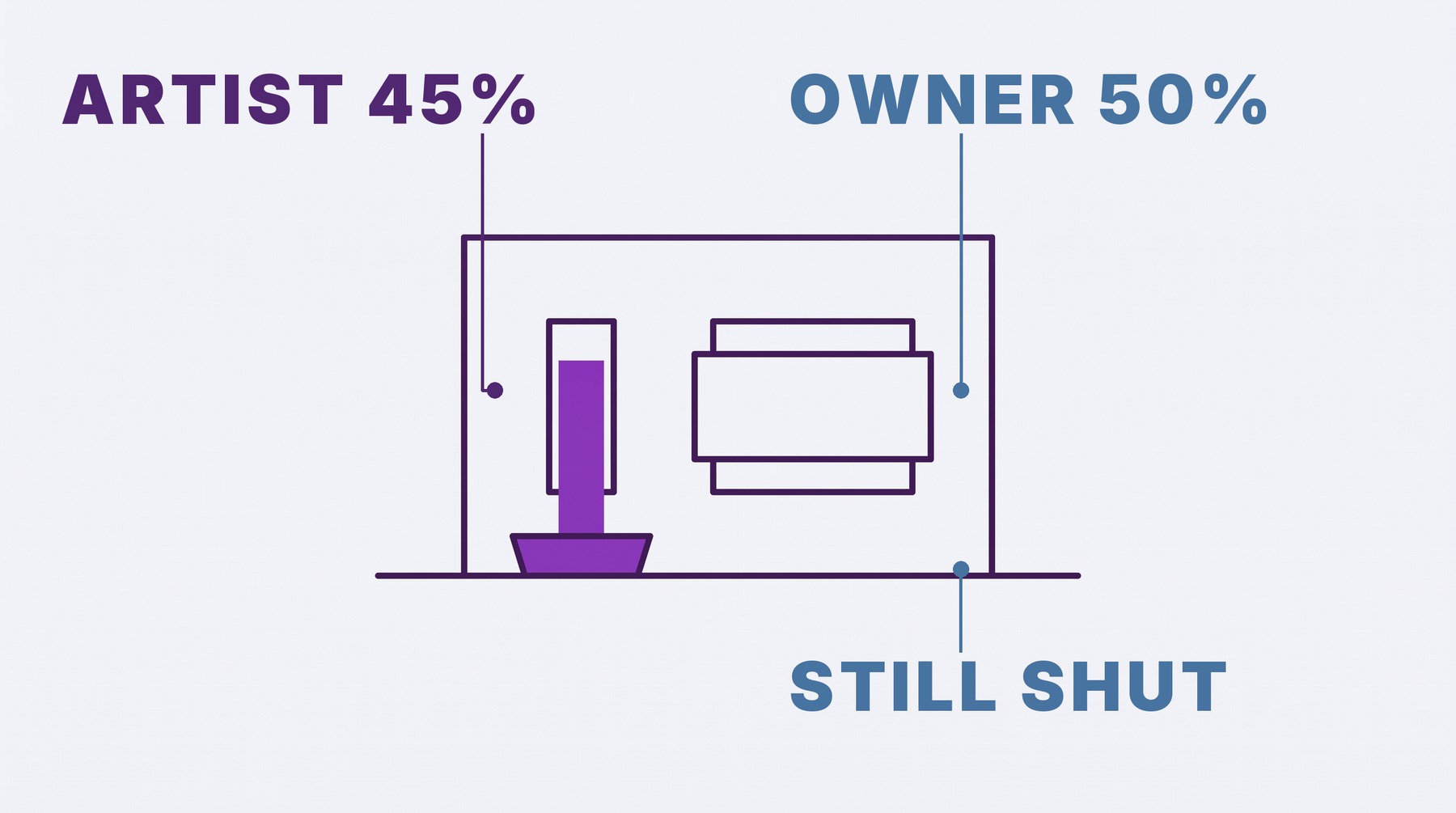
One body, two openings, and the smaller of the two is the one that usually gets opened. Registering as a featured artist claims the 45 per cent, and the larger share belongs to whoever owns the master.
Both roles on one account
Sign to a label and that owner is the label. Pay for the session yourself and the owner is you. One account then carries two entitlements, and each one has to be ticked separately on the form.
Registering as an artist and forgetting the rights owner role leaves the bigger share of every non-interactive play sitting unclaimed.
Registration is free, and SoundExchange takes an administrative fee of between four and six per cent of what it collects. Nothing about adding the second role costs anything extra.
Half of every play, on a form field. That is the entire cost of stopping at the first role, and it repeats on every recording in the catalogue.
The clock in the regulation
Three years runs from the date of the first distribution of royalties for a recording, and the funds sit in a segregated trust account until then. After that the collective is authorised to release the money and apply it against its own deductible costs.
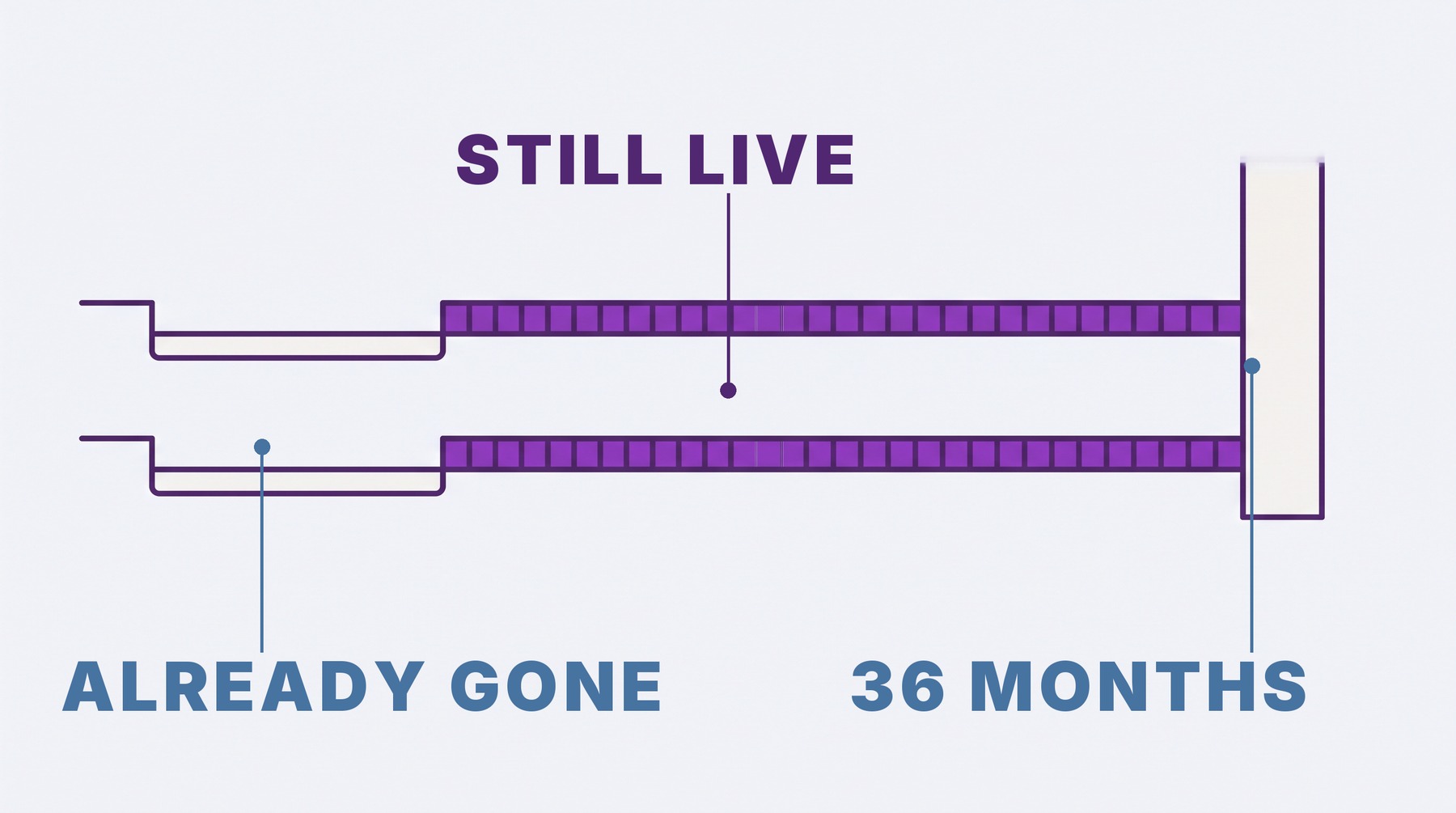
Mechanical money waits. Performance money accrues. This one ends against a wall written into a federal regulation, which is why a back catalogue is worth claiming this month rather than next year.
Registering, start to finish
Nothing in the sequence needs a lawyer, an accountant or a company behind it. It needs your legal name, your catalogue and about an hour.
Registration runs free at register.soundexchange.com. Select featured artist and rights owner together if you own your masters, because adding one later is a second application.
US registrants file a W-9. Everyone else files a W-8BEN, and without it a flat 30 per cent is withheld from every payment.
Song titles, ISRCs and release dates for every recording. Recordings that cannot be found through Search and Claim can be submitted to SoundExchange's own ISRC database.
Older releases may already have money accrued against them. Claim those first, because the oldest of them are closest to the limit.
Direct deposit drops the payment threshold to $100 monthly or $10 quarterly, against $100 quarterly on a paper check. Set that up in the same sitting rather than a year later.
Where the fuse stops short
SoundExchange covers one narrow thing, and the boundary is worth memorising because several expensive assumptions live just outside it.
On-demand streaming is outside it. That money reaches you through your distributor.
US terrestrial AM and FM radio is outside it, because the United States has no general performance right in recordings for broadcast.
Every country except the United States is outside it. Broadcast money abroad sits with national societies such as PPL and Re:Sound, each wanting its own registration.
Push the dial past the thirty-sixth month and watch the total fall.
Held at featured artist only, the live pool never rises above 45 per cent of what those plays generated. Switch the roles and the same months pay nearly twice as much, which is the whole argument for a form that takes an afternoon.
Open register.soundexchange.com today and put both roles on one account.
Where these numbers come from
The 45, 50 and 5 split, the free registration, the four to six per cent administrative fee and the payment thresholds are quoted from soundexchange.com, checked September 2026. The three year expiry is stated in its own FAQ and set out in 37 CFR 380.44, read at law.cornell.edu. The $600 in the panel is a worked example chosen because it divides cleanly across 36 months, and it is not a benchmark for any catalogue. Nothing here is a measured result about any artist.